Everyone · 3 min
Training load and ACWR explained
How Athlog calculates training load, what the ACWR tells you and how to read its colours.
Updated October 23, 2026
Athlog works out how hard your athletes are training from two things they already enter in their journal: how long the session was and how hard it felt. It then compares this week with the last four, so you can see when the load rises too quickly. You'll find both charts under Insights → Analytics and on each athlete's page.
Training load
Load = session length in minutes × how hard it felt (RPE)
The length comes from the session you planned. The RPE is the exhaustion the athlete enters in their journal, from 1 (very easy) to 10 (as hard as it gets).
| Session | Length | RPE | Load |
|---|---|---|---|
| Technique | 60 min | 3 | 180 |
| Tempo runs | 60 min | 7 | 420 |
| Competition | 90 min | 9 | 810 |
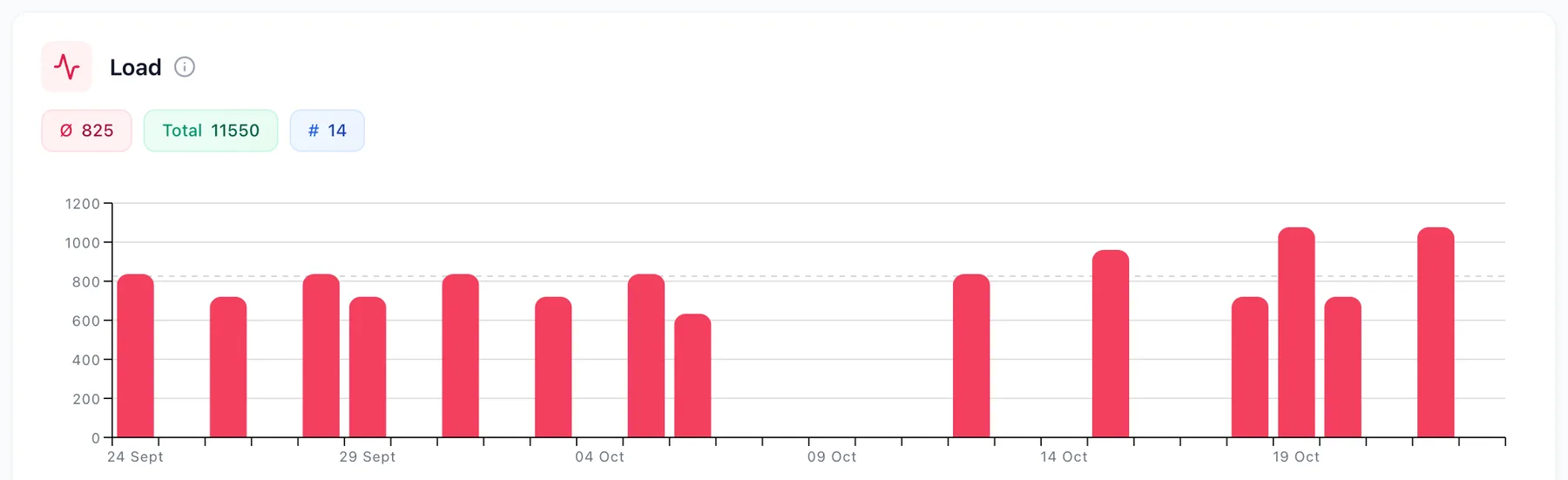
The chart shows the load for each day. The dashed line is the average for the period.
ACWR
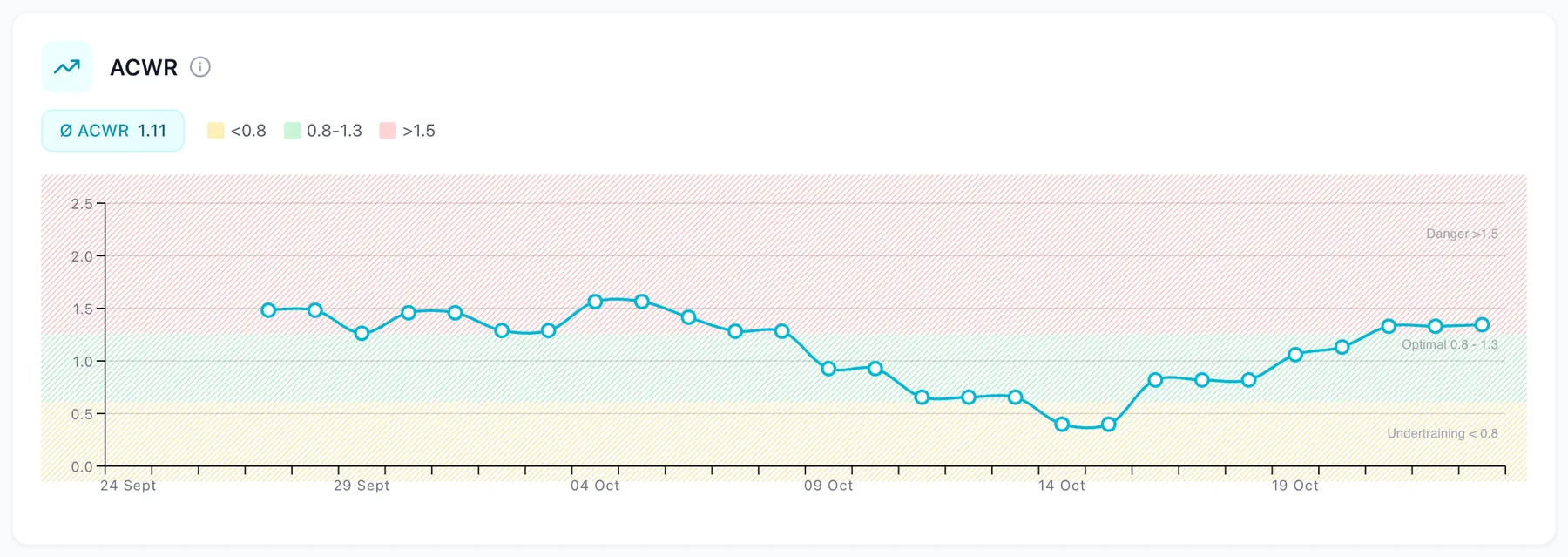
ACWR stands for acute to chronic workload ratio. It compares the load of the last 7 days with the average weekly load of the last 4 weeks:
ACWR = load of the last 7 days ÷ average weekly load of the last 4 weeks
An example: over the last four weeks, an athlete trained 2100, 1900, 2000 and 2200, which is an average of 2050 a week. This week they trained 2430. Their ACWR is 2430 ÷ 2050 = 1.18.
| ACWR | Zone | What it means |
|---|---|---|
| below 0.8 | Undertraining | Less training than usual. They won't improve much, and the next hard week will hit them harder. |
| 0.8 – 1.3 | Optimal | About what they're used to. This is where the risk of injury is lowest. |
| 1.3 – 1.5 | Increased risk | The load is going up quickly. Keep an eye on their sleep, energy and pain. |
| above 1.5 | Danger | Much more than usual. The risk of injury is highest here, so think about easing off. |
Good to know
- The numbers are only as good as the journal. If an athlete skips entries, it looks as if they trained less.
- An ACWR of 1 means this week was just like the last few. It's a reference point, not a target.
- Use the ACWR together with sleep, energy and pain on your dashboard, not on its own.
Didn’t find what you were looking for?
Send us an email. We usually reply the same day.