Track & Field Meme Inspo List: How Coaches Can Turn Viral Formats Into Better Athlete Communication
Auteur Athlog Team
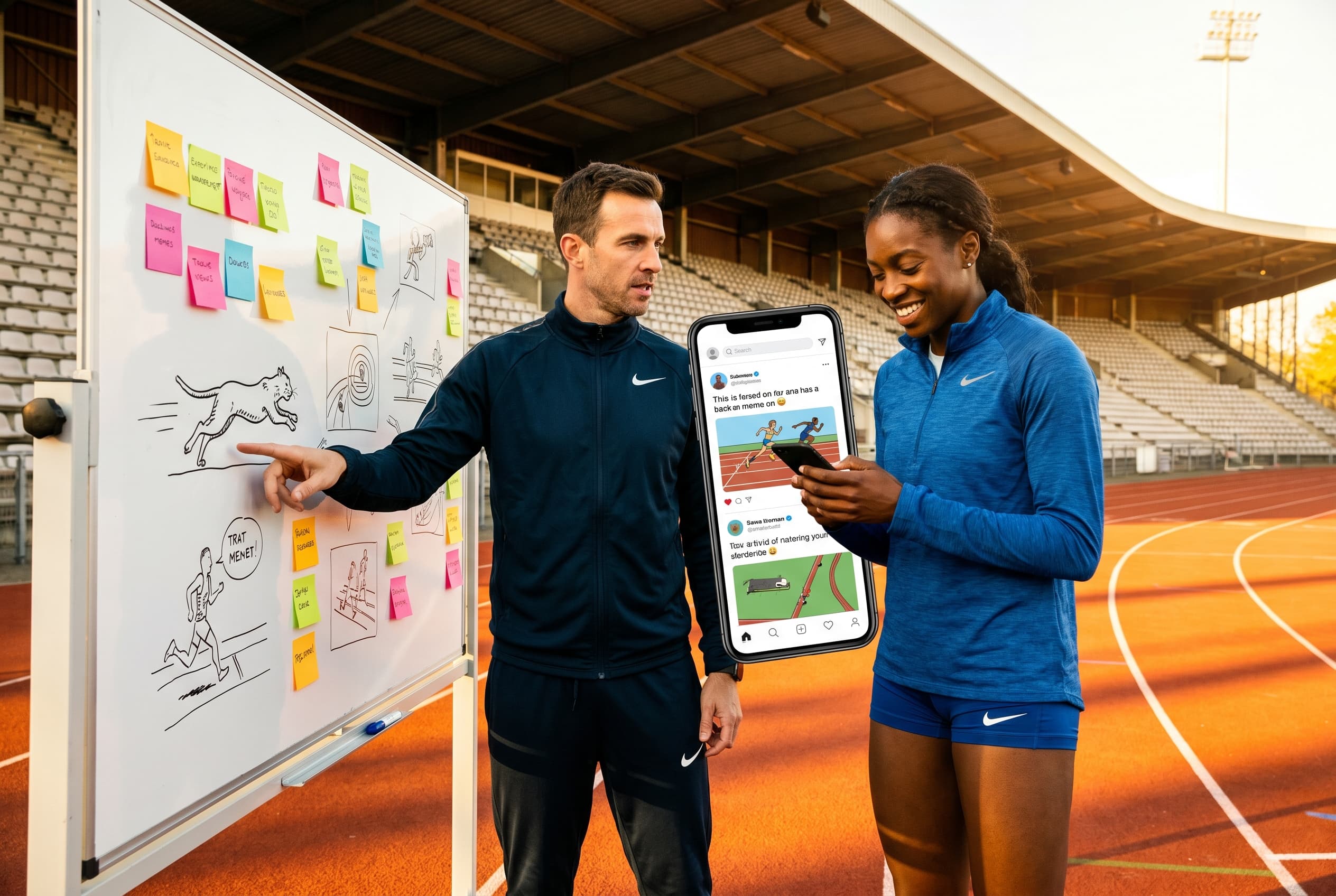
Memes are now one of the fastest ways athletes share culture, frustration, and daily training reality.
For coaches, that creates an opportunity: the same formats that spread jokes can also carry better coaching habits—if you use them with intent.
This is not about being “the funny coach.” It is about converting attention into useful behavior.
Why meme formats work in coaching communication
Most athletes scroll short, visual content every day. A plain text reminder about sleep, load, or recovery often gets ignored. A familiar meme format gets an immediate stop.
Used correctly, meme-based content helps coaches:
- increase message recall
- normalize useful check-in behavior
- reduce friction around honest feedback
- reinforce team language (green/yellow/red readiness, sRPE, pain flags)
The key is simple: the meme is the hook, not the point.
The coaching rule: reuse the format, not the original post
If you collect inspiration from public posts, keep this standard:
- use the structure and concept
- remake visuals with your own media
- rewrite all copy for your context
- avoid reposting someone else’s image or text without permission
This protects both copyright and brand quality.
A practical framework: 3 high-performing meme concepts
1) “ACWR turns red” reaction
Athlete pain point: “I trained hard all week and now everything feels heavy.”
Educational objective: show that rapid spikes in load increase risk, even when motivation is high.
Execution format:
- Frame 1: confidence (“I can handle one more hard day”)
- Frame 2: dashboard warning (load spike / ACWR out of range)
- Frame 3: coach response (reduce volume, protect quality)
Coaching CTA: “Don’t chase fatigue. Protect adaptation.”
2) “Coach asks how training was”
Athlete pain point: replying “good” says nothing.
Educational objective: teach a better 4-line post-session report.
Execution format:
- Panel 1: athlete says “good”
- Panel 2: coach confusion
- Panel 3: improved template appears
Template to reinforce:
- Session goal/type
- Effort × duration
- What changed today (sleep/mood/soreness/pain)
- Readiness color for next session
Coaching CTA: “Four lines. Better decisions.”
3) “Deload signs” skit
Athlete pain point: ignoring early fatigue signals until performance drops.
Educational objective: normalize proactive deloading.
Execution format:
- quick cuts of common signals (sleep down, mood flat, soreness persistent)
- one clear coaching decision (volume -20% to -40% for 3–7 days)
- close with recovery focus and return-to-quality message
Coaching CTA: “Deload early, progress longer.”
Content quality checklist for coaches
Before posting, verify five points:
- Single lesson: one post = one behavior change.
- Clear action: what should the athlete do today?
- Team language: reuse the same terms used in training.
- No shaming: humor should target situations, not individuals.
- Data bridge: connect the joke to a measurable signal.
If a post is funny but produces no action, it is entertainment—not coaching communication.
Weekly publishing rhythm (simple and sustainable)
A practical cadence for clubs and squads:
- Monday: short educational meme (planning or load)
- Wednesday: relatable communication meme (coach-athlete feedback)
- Friday: recovery or readiness reminder
Keep each post lightweight. Consistency beats production complexity.
How Athlog supports this workflow
Athlog helps coaches connect social education with daily execution:
- athletes log session load in seconds
- wellness and pain trends are visible in one place
- coach-athlete communication stays structured, not scattered
- readiness signals can be acted on before problems escalate
That makes meme-led content more than brand activity—it becomes part of the coaching system.
Final takeaway
A strong meme strategy for coaches is not about chasing virality.
It is about translating familiar internet formats into better athlete behavior: clearer feedback, earlier risk detection, and more consistent training decisions.
Use memes to start attention. Use coaching structure to finish the job.